Sustainable Paulownia Timber
In modern architecture, marine construction, and surfboard manufacturing, material selection has a profound impact on our environment. Today’s designers and builders demand high-performance materials that do not compromise the earth’s natural resources.
Paulownia is uniquely positioned to meet this demand. As an ultra-lightweight, highly stable hardwood, it delivers exceptional architectural and structural outcomes while boasting one of the most environmentally responsible lifecycles of any commercial timber.
The Living Material: The Paulownia Tree in Bloom
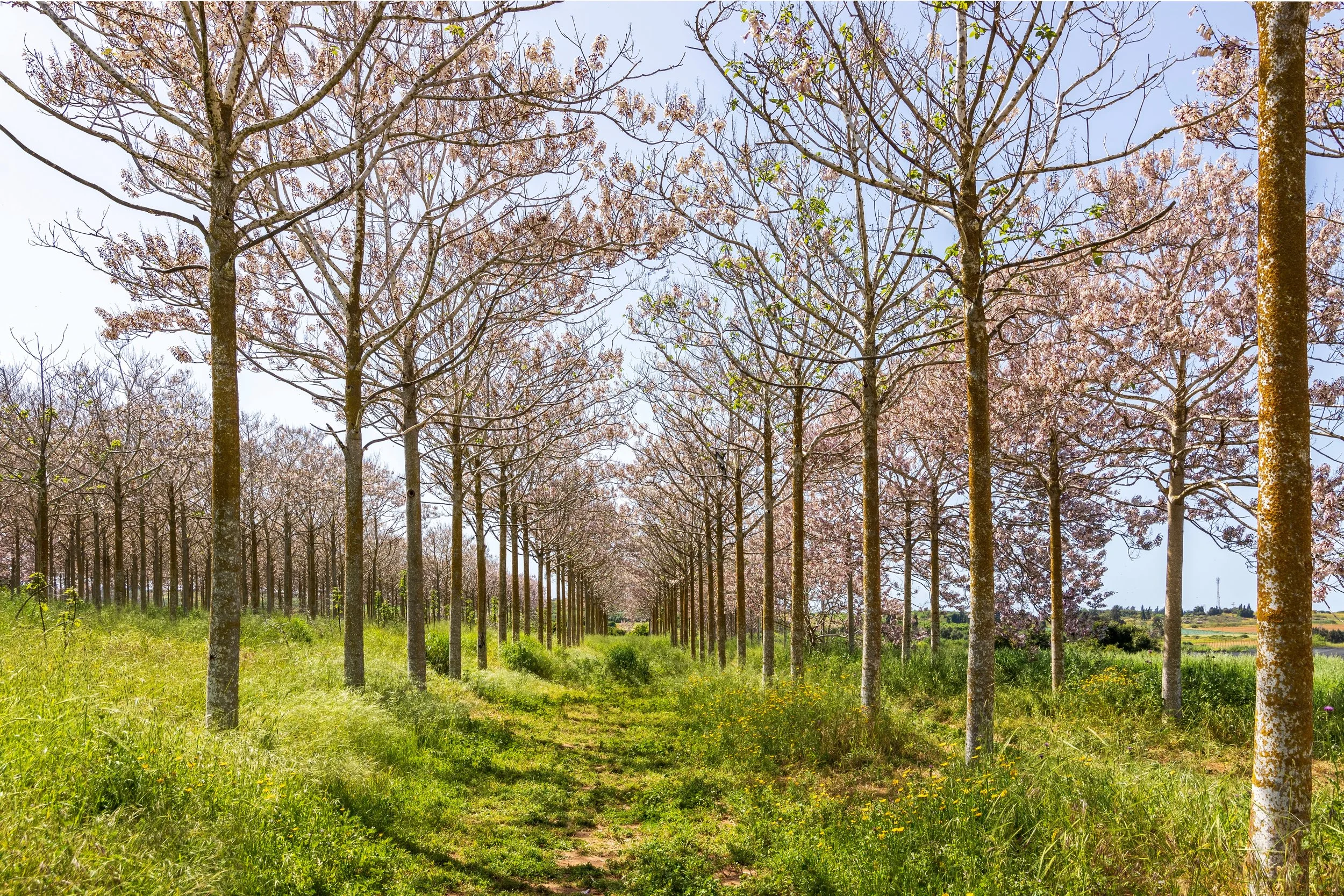
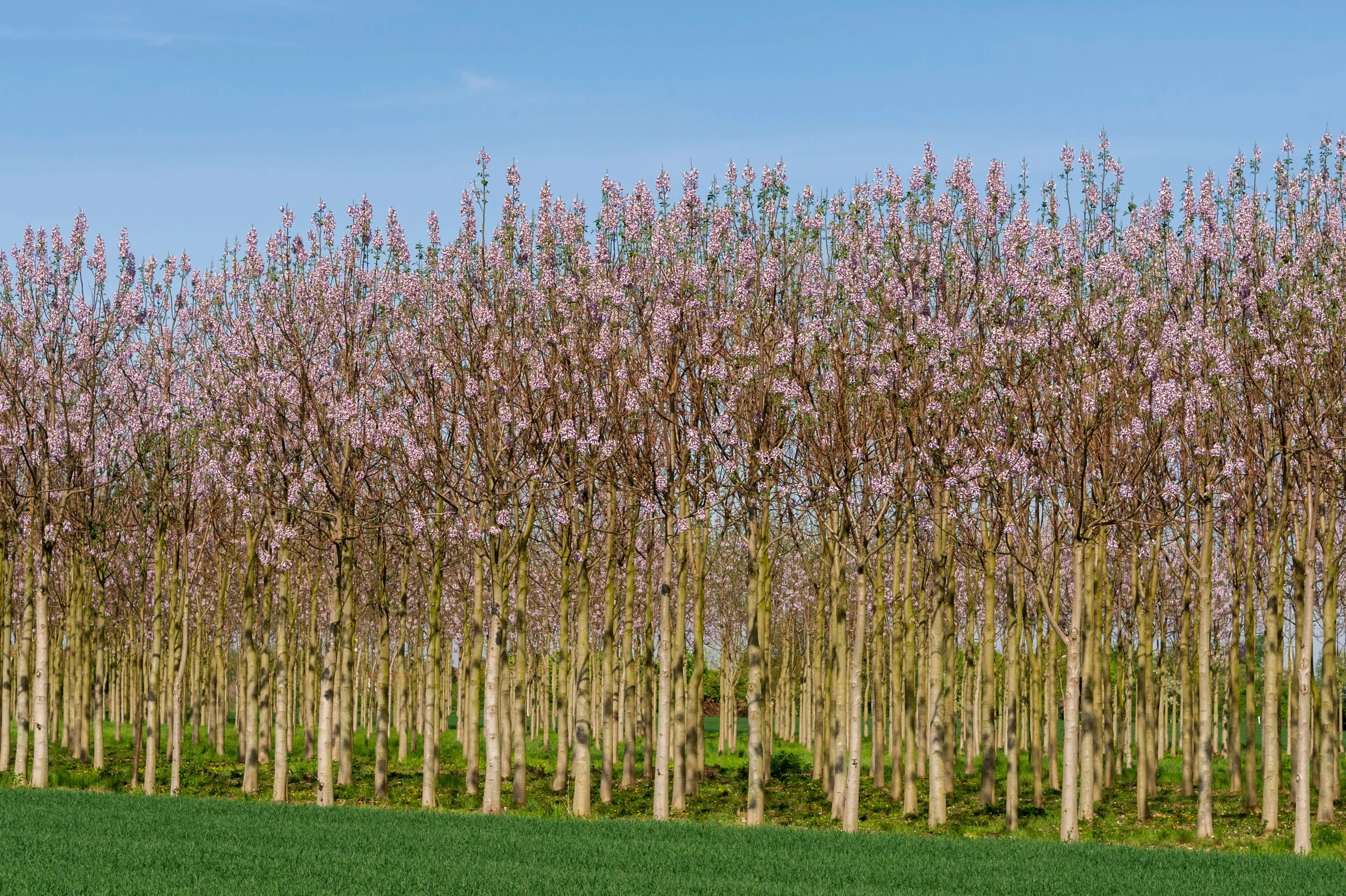
Before it becomes the precision-milled timber specified by architects, builders, and shapers, Paulownia is a striking feature of the natural landscape the vitality and sheer scale of these trees are immediately apparent.
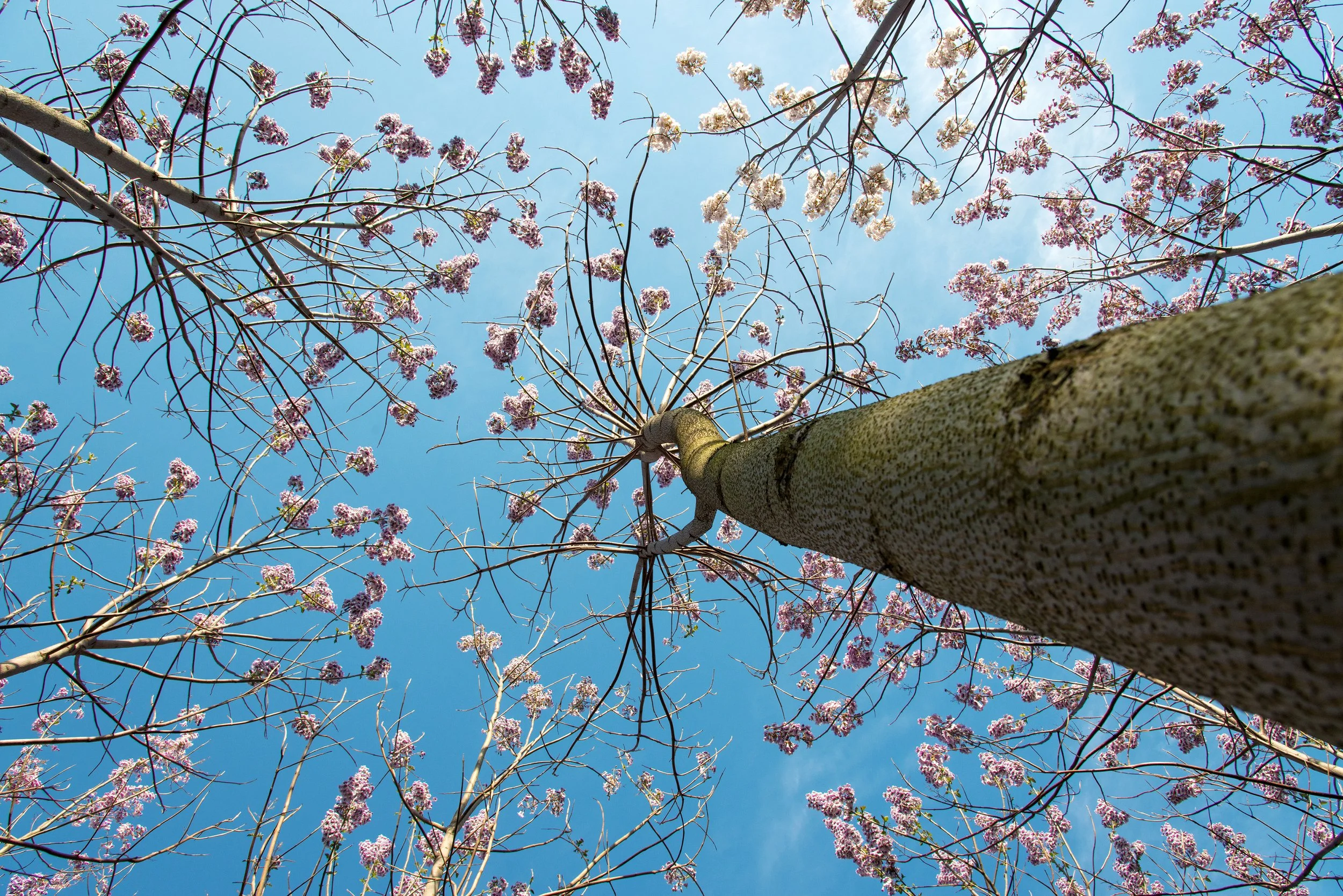
While Paulownia is celebrated in the construction industry for its pale blonde, dimensionally stable wood, it is equally renowned in the botanical world for its spectacular seasonal display. In the spring, just before the tree's massive, heart-shaped leaves fully unfurl, the canopy erupts into a sea of pale violet and lilac.
The tree produces large, upright clusters of tubular flowers that carry a delicate, sweet fragrance. These vibrant blooms do more than just create a breathtaking landscape—they attract a wealth of bees and natural pollinators, fostering a thriving, biodiverse environment within the plantation itself.
The sheer energy required to produce such a massive floral display is a testament to the tree's unique biology. The same rapid metabolism that fuels the spring bloom is what drives Paulownia’s status as the world’s fastest-growing hardwood.
A Blueprint for Sustainable Timber
We are committed to providing a premium timber solution that actively helps stop the logging of native, slow-growth forests. Here is how our carefully sourced Paulownia achieves this:
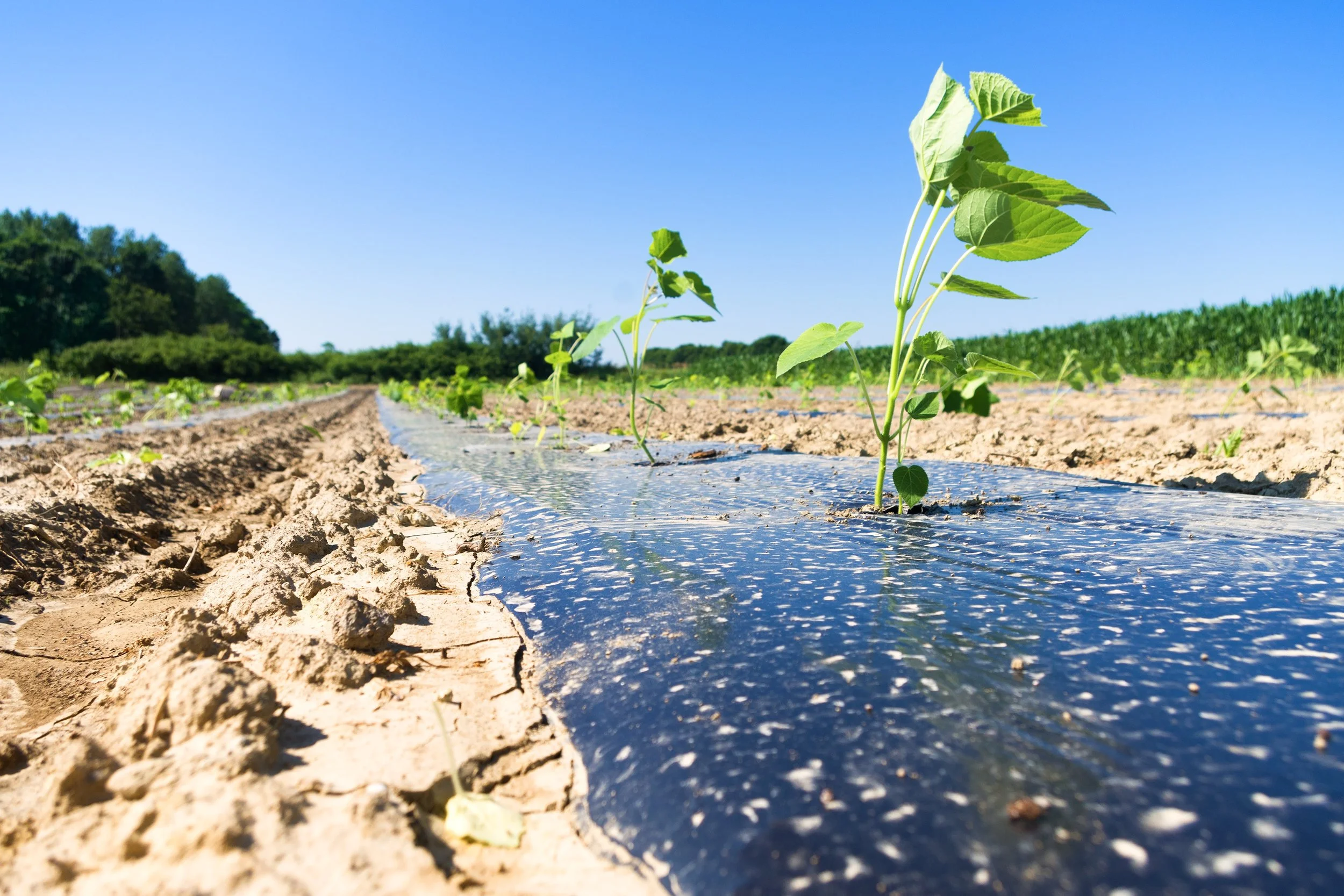
100% Plantation Sourced Our timber is strictly sourced from dedicated, managed plantations. We supply a specific, high-quality hybrid (Paulownia tomentosa x Paulownia fortunei), cultivated precisely for its clear grain and structural reliability. By relying entirely on purpose-planted crops, we help relieve the immense pressure currently placed on the world’s vulnerable old-growth forests.
The World's Fastest-Growing Hardwood Traditional hardwoods and popular marine timbers, such as Western Red Cedar, can take decades or even centuries to mature. Paulownia reaches harvest maturity in as little as 5 to 8 years. This rapid growth cycle allows for an incredibly high yield of timber on a much smaller footprint, while simultaneously drawing down significant amounts of carbon dioxide from the atmosphere.
Regenerative Harvesting (Coppicing) What truly sets Paulownia apart is its ability to regenerate after harvest through a practice called coppicing. When the tree is harvested, it is cut at the base rather than uprooted. A new tree rapidly grows directly from the existing stump and established root system.
Zero Clear-Felling: A single planting can yield multiple generations of high-grade timber over decades.
Soil Protection: Because the root systems remain intact, the soil structure is preserved, preventing erosion and maintaining the health of the surrounding ecosystem.
A Natural Alternative to Synthetics & Slow-Growth Woods Beyond the forest, Paulownia continues to offer environmental benefits in the workshop and on the job site.
In Architecture: It provides a sustainable, high-performance alternative to traditional, slow-growing cladding and lining timbers.
In Surf & Marine: It is actively shifting the surfcraft industry away from toxic, petroleum-based foams and resins. A hollow-core Paulownia surfboard or handplane is a natural, long-lasting alternative that eventually returns to the earth without leaving microplastics behind.
Build with Confidence
When you specify our Paulownia VJ lining boards, edge-glued sheets, or custom-milled planks, you are choosing a material that is as accountable to the environment as it is to your project’s structural and aesthetic demands.